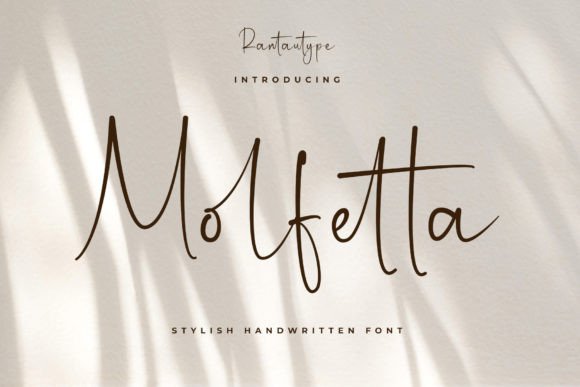
Molfetta: A Versatile Design Element for Creative Projects
Molfetta is a distinctive typeface that has gained popularity among designers and creatives for its clean, elegant appearance and adaptability across various media. Originally developed as a serif font, Molfetta offers a balance between traditional typography and modern design sensibilities. Its use in watermarks, signature logos, quotes, album covers, magazines, business cards, and other design projects makes it a compelling choice for professionals seeking to enhance visual appeal without compromising clarity.
What Makes Molfetta Unique?
Molfetta stands out due to its refined stroke contrast and balanced proportions. Unlike some more ornate or overly stylized fonts, Molfetta maintains readability even at smaller sizes, which is crucial for applications like watermarks and business cards where legibility is key. The font's subtle serifs provide a touch of sophistication without overwhelming the text, making it suitable for both digital and print formats.
One of the most notable aspects of Molfetta is its versatility. It can be used in a wide range of contexts—from minimalist designs to more intricate layouts. This flexibility allows designers to incorporate it into multiple projects without needing to switch fonts frequently, streamlining the creative process.
Comparing Molfetta with Similar Fonts
When evaluating Molfetta against similar fonts, it's important to consider how each typeface performs in different scenarios. For instance, compared to more classical serif fonts like Times New Roman or Garamond, Molfetta offers a slightly more contemporary feel while retaining the elegance of traditional typography. This makes it an excellent alternative for designers looking to modernize their work without straying too far from familiar styles.
In comparison to sans-serif fonts such as Helvetica or Arial, Molfetta provides a more refined look that is better suited for formal or artistic applications. However, this also means it may not be the best choice for projects requiring maximum legibility at very small sizes, such as body text in long-form documents.
Another consideration is the availability of weights and styles. While Molfetta typically comes in a standard set of weights (light, regular, bold), it may not have as many variations as some premium typefaces. This could be a limitation for designers who need extensive typographic options for complex layouts.
Best-Fit Situations for Using Molfetta
Molfetta shines in specific design contexts where aesthetics and clarity are equally important. For example, when creating watermarks, the font’s subtlety ensures that the text remains unobtrusive while still being clearly visible. This is particularly useful for photographers and graphic designers who want to protect their work without detracting from the main content.
For signature logo designs, Molfetta's clean lines and professional appearance make it ideal for conveying trust and credibility. It pairs well with minimalistic branding strategies that focus on simplicity and clarity.
In the context of quotes or inspirational messages, Molfetta adds a touch of elegance that complements the message itself. Whether used in print or digital formats, the font helps elevate the presentation of text-based content.
Album covers and magazine layouts benefit from Molfetta’s ability to stand out without overpowering the visual elements. Its presence can guide the viewer’s eye and add a layer of sophistication to the overall design.
Business cards using Molfetta can create a lasting impression. The font's professionalism and readability ensure that contact information is clear and memorable, reinforcing the brand identity effectively.
When Molfetta Might Not Be the Best Choice
While Molfetta excels in many areas, there are situations where it may not be the optimal choice. For instance, in projects requiring high levels of customization, such as custom typography or highly stylized logos, designers might prefer fonts with more extensive character sets or unique features.
If a project requires a more casual or playful tone, Molfetta’s refined nature may not align with the desired aesthetic. In these cases, alternative fonts with more decorative or informal characteristics could be more appropriate.
Additionally, if a designer needs a font that works well in multiple languages or supports a wide range of characters, they should verify whether Molfetta includes the necessary glyphs. Some fonts may lack support for certain scripts or symbols, which could limit their usefulness in international projects.
Practical Considerations and Decision Factors
Before choosing Molfetta for a design project, it's essential to evaluate several factors. First, consider the intended use of the font. If it will be used in a context where legibility is paramount, Molfetta’s clean design is a strong advantage. However, if the project demands a more dynamic or expressive typeface, other options may be worth exploring.
The size and format of the final output should also be taken into account. Molfetta performs exceptionally well in larger formats such as posters, billboards, and album covers. However, for smaller screens or printed materials with limited space, it may be necessary to test how the font appears in different conditions.
Lastly, licensing and cost are practical considerations. While Molfetta may be available through free or affordable font libraries, designers should ensure that they have the appropriate rights to use the font in commercial projects. This is especially important for freelancers or agencies working on client-based assignments.
By weighing these factors, designers can determine whether Molfetta is the right fit for their needs or if another font would better serve the project’s goals.